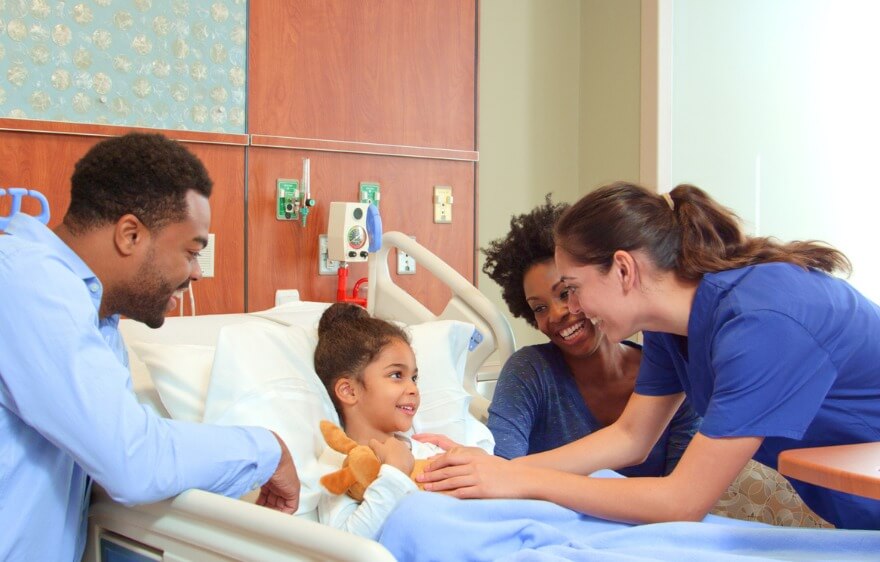

Returning home after a prolonged hospital stay can be a tremendous relief. Home is where you feel safe, comfortable, and surrounded by familiar pieces of your life and memories with loved ones. Due to advances in technology, home care is becoming increasingly commonplace. Not only do clients generally feel more comfortable in their own homes, but it has also been shown that clients who receive care at home have lower rates of consultations, procedures, and device use than those who remain in the hospital, and achieve similar or better outcomes.
Heading home can feel like a comforting step, but whether you are the client or a loved one, it’s important to be realistic about the challenges of transitioning to home to ensure you are prepared.
4 Tips for Transition of Care from Hospital to Home
Having a smooth transition from the hospital to home will not only reduce stress for everyone involved but also decrease the chances of a client being readmitted to the hospital and lower overall healthcare costs.
1. Be Honest & Ask Questions
If you are the loved one of someone in need of home health care, you must be completely honest about the care you will be able to provide and assist with at home. Do not feel guilty to admit that getting your loved one out of bed may be difficult or that you do not know how to give a medication. The hospital staff should be able to thoroughly answer your questions and provide training on how to best care for your loved one. For anything beyond your abilities, you should be provided with resources. The care of your loved one should never be at risk.
2. Write Down Medications and Confirm Them Multiple Times
As many as 40 percent of clients over 65 have had medication errors after leaving the hospital. If you do not work in the medical field, understanding the basics of the medications prescribed and what they entail can be challenging. Get clear, written instructions from the hospital staff and confirm them with the doctor. Some medications need to be taken at specific times of the day, and not all are taken in the same way. Ask as many questions as many times as you need.
Managing medications at home can be challenging, so you may want to consider investing in a pill organizer or exploring services like PillPack, which packages and delivers medications with clear instructions for you.
3. Evaluate Home Health Care Providers Before Discharge
When extra care is needed at home, it’s important to hire someone you can trust and feel will provide excellent care for your loved one. You may be handed a list of agencies at the hospital, but finding a good fit is crucial to your comfort and the health of your loved one. This is not a decision that should be taken lightly, as home health care providers will be in the home and spending a significant amount of time with you and your loved one. Evaluate your options, speak with family members and friends, and ask as many questions as necessary to feel comfortable making a hiring decision.
4. Prepare the Home
Before discharge, it’s important that everything at home will enhance your loved one’s comfort and safety. This may include rearranging furniture to allow your loved one to move around the home more easily or cleaning to create an environment that promotes health. If needed, arrange to have a hospital bed or bulky medical equipment delivered and set up in advance of discharge. Display emergency numbers and health provider information in a prominent place (such as on the fridge).
Your loved one’s health care provider may order other Durable Medical Equipment (DME), such as a wheelchair or oxygen equipment. Medicare covers much of this equipment and you can find a local supplier on medicare.gov or by calling 1-800-MEDICARE. Otherwise, contact your insurance company as soon as possible to ensure necessary DME is in the home prior to discharge. The more you are able to be prepared at home, the easier and safer the transition will be for you and your loved one.
Coming home after a stay in the hospital can be wonderful for a client and his or her loved ones. With clear care instructions and a desire to aid in your loved one’s care, you can make the transition from hospital to home a positive and safe experience.
For more information on home health care, contact us today. We’re here 24/7 to answer any questions you may have to ensure the safety and health of you and your loved ones.