
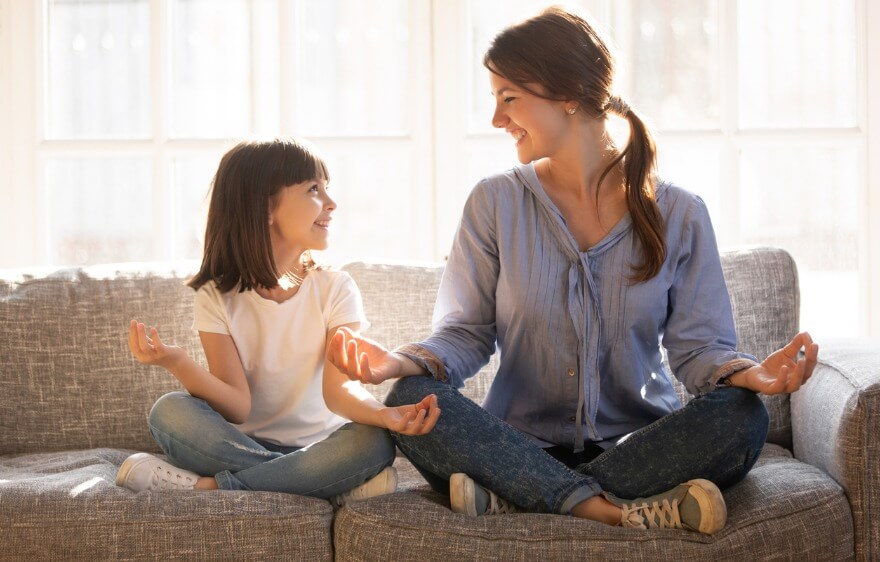
If you’re a parent, you know that raising emotionally resilient, self-aware, and focused children has become more important — and more challenging — than ever. Today’s families juggle the demands of school, work, screen time, extracurriculars, and emotional well-being, often feeling like they’re constantly in motion.
Amid this daily whirlwind, finding calm and presence might seem like a luxury — but it’s actually a necessity.
Enter mindfulness: a growing practice with the potential to change the way children and families cope with stress, regulate emotions, and connect more deeply with themselves and each other. With strong traditional roots and support from modern practices, mindfulness can offer real benefits to children of all ages and needs. This is especially true for kiddos who manage developmental, emotional, and sensory challenges.
In this helpful guide, we’re taking a look at what mindfulness really is, how it helps children and families, and how to start building simple, sustainable habits that fit into everyday life. Whether you’re a parent, caregiver, teacher, or therapist, learning about mindfulness for kids can have a major positive impact.
What Is Mindfulness?
Mindfulness is the practice of being fully present in the moment — paying attention to your thoughts, feelings, bodily sensations, and surroundings without judgment. Rather than reacting impulsively or getting caught up in worry or distraction, mindfulness helps us slow down, observe, and respond with intention.
Though mindfulness has deep roots in meditation and traditional philosophies, it has found a valuable place in modern healthcare, education, and therapy. For children, mindfulness isn’t about sitting still in silence for long stretches — it’s about learning to notice their feelings, regulate their energy, and bring awareness to their actions and environment.
In short, mindfulness for kids is about helping them tune in to themselves and the world around them so that they can navigate life with more balance, awareness, and resilience.
How Can Mindfulness Help Kids?
Children, like adults, experience stress, anxiety, overstimulation, and emotional ups and downs. But unlike adults, they may not yet have the language tools or life experience to manage these feelings in healthy ways. This is where mindfulness comes in.
Practicing mindfulness helps kids:
- Recognize and name their emotions
- Self-regulate rather than meltdown or shut down
- Improve focus and attention
- Respond to challenges thoughtfully instead of reacting impulsively
- Develop empathy and compassion
- Feel more grounded and less overwhelmed
Mindfulness for kids supports the development of self-awareness, emotional intelligence, and executive functioning skills — essential abilities that set the stage for success in school, relationships, and life.
Conditions That Benefit from Mindfulness Practice
Mindfulness can be especially beneficial for children with developmental and sensory differences, as it provides tools to self-regulate, reduce anxiety, and improve focus. Let’s take a look at some specific conditions where mindfulness practices have shown meaningful benefits:
Attention-Deficit/Hyperactivity Disorder (ADHD)
Children with ADHD often struggle with impulsivity, inattention, and hyperactivity. Mindfulness helps build attentional control by training the brain to stay present and return to the moment when distractions arise. In these situations, mindfulness practice can potentially improve executive functioning and reduce symptoms of inattention.
Autism Spectrum Disorder (ASD)
Kids on the autism spectrum may have heightened sensory sensitivities, difficulty with emotional regulation, and challenges with social interaction. Mindfulness for children with autism focuses on enhancing emotional awareness, promoting self-regulation, and providing calming sensory experiences. It can also help reduce anxiety and improve communication.
Sensory Processing Disorder (SPD)
Children with sensory processing disorder (SPD) can be easily overwhelmed by sensory input, such as loud noises, bright lights, or even certain clothing textures. Mindfulness encourages body awareness and offers strategies to ground the child in the present moment, helping them to manage sensory overload and develop coping skills for stressful environments.
Anxiety and Mood Disorders
For kids with anxiety or mood challenges, mindfulness helps to calm the nervous system, reduce negative thought patterns, and provide a sense of safety and predictability. By learning to anchor their attention and breathe through big feelings, children become more resilient and emotionally secure.
The Benefits of Mindfulness for Kids
There’s a growing body of research, as well as everyday observations from parents, teachers, and therapists, that support the wide-ranging benefits of mindfulness for children. From classroom success to emotional well-being, mindfulness lays a strong foundation for healthy development. Below are some of the most notable outcomes children can experience with regular mindfulness practice.
Improved Focus and Concentration
Mindfulness helps children strengthen their attention by training the brain to stay present and return to the task at hand when distractions arise. This skill is particularly valuable in school settings, where sustained focus, listening, and organization are essential for learning. Over time, mindful kids tend to be better at managing time, completing assignments, and filtering out unhelpful stimuli.
Enhanced Emotional Regulation
Children who practice mindfulness regularly learn to identify their emotions as they arise, rather than being overwhelmed or reactive. This allows them to pause, take a breath, and choose a more thoughtful response. As a result, kids become more capable of navigating big feelings like anger, frustration, or sadness with greater ease and less behavioral disruption.
Decreased Anxiety and Stress
Mindfulness activates the parasympathetic nervous system — the body’s natural relaxation response — helping kids feel more grounded and calm. Regular practice reduces the grip of anxious thoughts, so children feel safer and more in control of their internal experiences. This can be especially helpful for kids facing academic pressures, social worries, or sensory overwhelm.
Better Sleep
Mindfulness techniques such as deep breathing, guided imagery, and body scans are powerful tools to help kids wind down at the end of the day. These practices quiet racing thoughts and relax the body, making it easier for children to fall asleep and stay asleep. Establishing a mindful bedtime routine can dramatically improve sleep hygiene and promote healthier sleep patterns.
Increased Self-Confidence
By tuning into their thoughts and feelings without judgment, kids begin to build a stronger, more compassionate relationship with themselves. This self-awareness fosters a sense of autonomy and inner strength. Over time, children who practice mindfulness are more likely to trust their instincts, make thoughtful decisions, and feel confident in who they are.
Improved Social Skills
Mindfulness helps children develop empathy, compassion, and active listening — all of which are essential components of strong social relationships. As kids become more attuned to their own emotions, they also become better at understanding and responding to the emotions of others. This can lead to more positive peer interactions, stronger friendships, and reduced conflict in group settings.
Seven Mindfulness Activities for Kids
Mindfulness doesn’t have to be formal or complicated. In fact, the most effective practices are often the simplest ones, seamlessly woven into everyday life in a playful and engaging way.
Here are some kid-friendly mindfulness activities to try:
1. Deep Breathing Exercises
Teach children to take slow, deep breaths to calm their bodies and minds. Try “flower and candle” breathing — inhale as if smelling a flower, exhale as if gently blowing out a candle.
2. Gratitude Practice
Encourage your child to name three things they’re grateful for each day. Gratitude boosts positive emotions and helps shift focus away from stress.
3. Nature Walks
Spending time in nature is a powerful form of mindfulness. Go for a “noticing walk” and encourage your child to observe five things they see, hear, smell, or feel.
4. Sensory Play
Playdough, sand, water beads, and textured objects are great for sensory exploration. Encourage your child to focus on how things feel, smell, and sound.
5. Coloring or Drawing
Mindful coloring helps children focus on the present. Choose calming designs or mandalas, or let your child freely express themselves with color.
6. Mindful Listening
Ring a bell or play a soft sound and ask your child to listen carefully until they can’t hear it anymore. This trains auditory attention and stillness.
7. Body Scans
Guide your child through a brief body scan — starting at their toes and moving up — asking them to notice sensations, tension, or calmness in each part of their body.
Integrating Mindfulness into Daily Routines
The best way to make mindfulness stick is to incorporate it naturally into your daily rhythms. Here are some ideas:
- Morning mindfulness: Start the day with a few deep breaths, a stretch, or setting an intention.
- Mealtime awareness: Encourage kids to notice the taste, smell, and texture of their food.
- Mindful transitions: Use breathing or grounding exercises between activities, such as before homework or after school.
- Bedtime wind-down: Include breathing, gratitude, or a short body scan in your nighttime routine to signal safety and calm.
Consistency is key. Even just two to five minutes a day of mindfulness practice with your kids can make a difference.
The Role of Occupational Therapy in Mindfulness
Occupational therapy (OT) focuses on helping children develop the skills they need to participate fully in daily life. For many children — especially those with developmental delays, sensory processing issues, or emotional challenges — mindfulness aligns beautifully with the goals of OT.
An occupational therapist can:
- Incorporate mindfulness into sensory regulation plans
- Use breathing and grounding techniques as part of self-regulation training
- Help children build routines that include calming strategies
- Support parents in creating a sensory-friendly, mindful home environment
- Customize mindfulness activities to meet a child’s specific developmental needs
For example, a child with ADHD might work with their OT to create a movement-based mindfulness routine that helps them transition from high-energy play to focused learning time. Mindfulness for kids doesn’t look the same for every child, and OTs are uniquely trained to tailor approaches based on the child’s individual profile.
When it comes to pediatric therapy, the team at Care Options for Kids believes in the importance of personalized, family-centered practices. Whether it’s integrating mindfulness techniques into occupational therapy sessions or helping kids self-regulate and express emotions, our goal is to develop strategies that are right-sized for each unique situation. We want to ensure your child and family have all the tools and resources they need to thrive and succeed.
Supporting the Whole Family
When kids practice mindfulness, the benefits often ripple out to the whole family. But parents and caregivers can amplify those benefits by participating in mindfulness too.
Mindful parenting isn’t about being perfect — it’s about being present. Modeling mindfulness helps children feel seen, heard, and emotionally secure. It also builds stronger parent-child relationships and reduces family stress.
Try practicing a short breathing exercise together, or create a “mindful moment” during family meals or car rides. When mindfulness becomes part of the family culture, everyone benefits.
Developing Everyday Calmness
Mindfulness for kids is a powerful, research-backed approach that can go a long way toward helping children build the emotional, cognitive, and social skills they need to thrive.
Whether your child is dealing with sensory challenges, attention difficulties, anxiety, or just the everyday stresses of growing up, mindfulness offers simple tools for staying regulated, connected, and resilient. By weaving mindfulness into daily life and seeking support from professionals like occupational therapists, families can create calmer homes, deeper connections, and happier, healthier kids.
So take a deep breath, slow down, and remember: the journey to mindfulness starts with just one mindful moment.
Schedule Your Child’s Care Assessment Today
At Care Options for Kids, we understand the unique challenges of caring for a child with basic to medically complex health needs. Our dedicated team of pediatric therapists is here to support your family with compassionate, expert care tailored to your child’s needs. Contact us today to schedule an assessment and learn how we can help you navigate this journey with confidence and care.
Click here to start your journey to better care.
This post is for educational and informational purposes only. You should always speak with your therapist before implementing this information on your own.